
A modern environmental scourge: Plastic waste from the agricultural sector.
According to studies, the plastic produced for the agricultural sector accounts for approximately 2% of total production. Therefore, around 7.6 million tons of plastic are currently produced and used in agriculture worldwide each year. Specifically in Europe, at least 750 thousand tons of virgin plastic are used annually to meet the needs of the agricultural sector. Agricultural plastic waste can account for up to 40% of the total domestic plastic waste in countries such as Poland, Lithuania, and Cyprus.
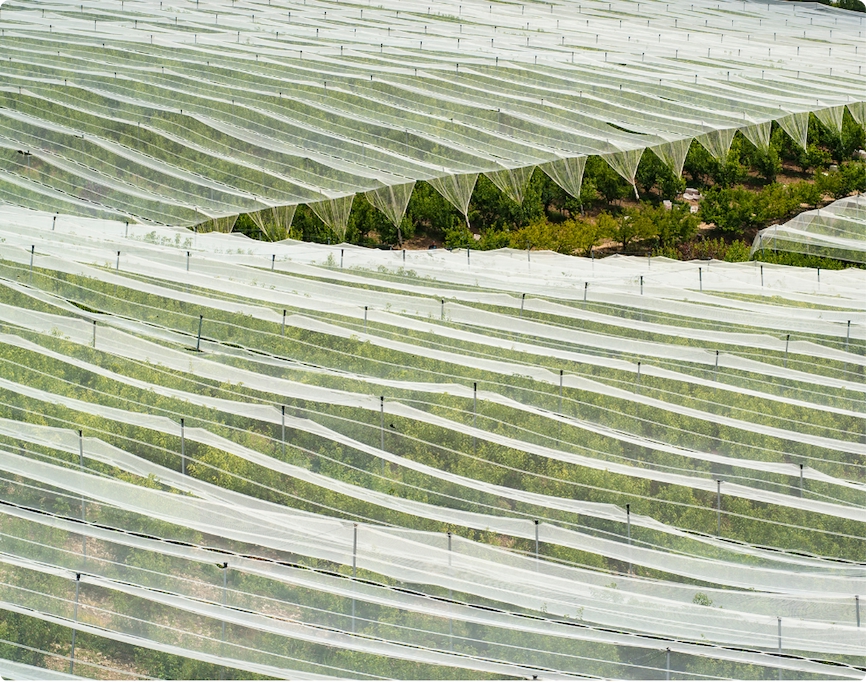
From agricultural waste to high-quality “green” plastic
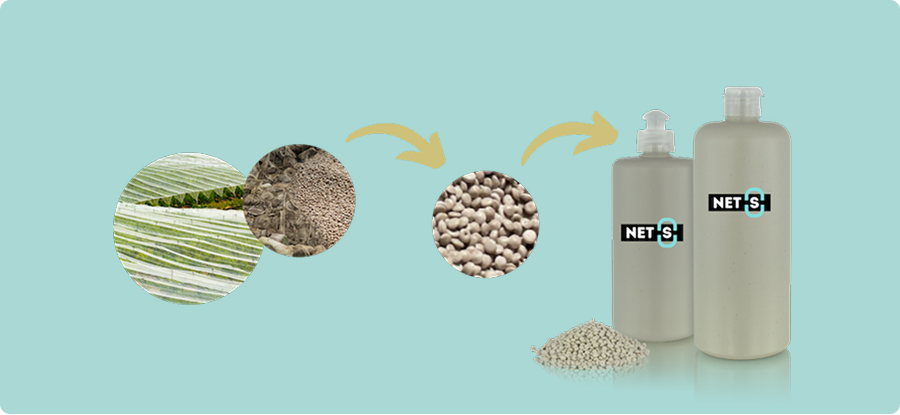
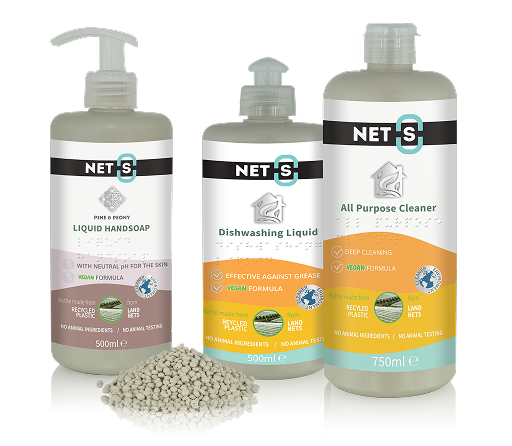
From agricultural plastic waste (nets, threads, and twines) to high-quality raw material (r-HDPE) in pellet form “green” plastic.
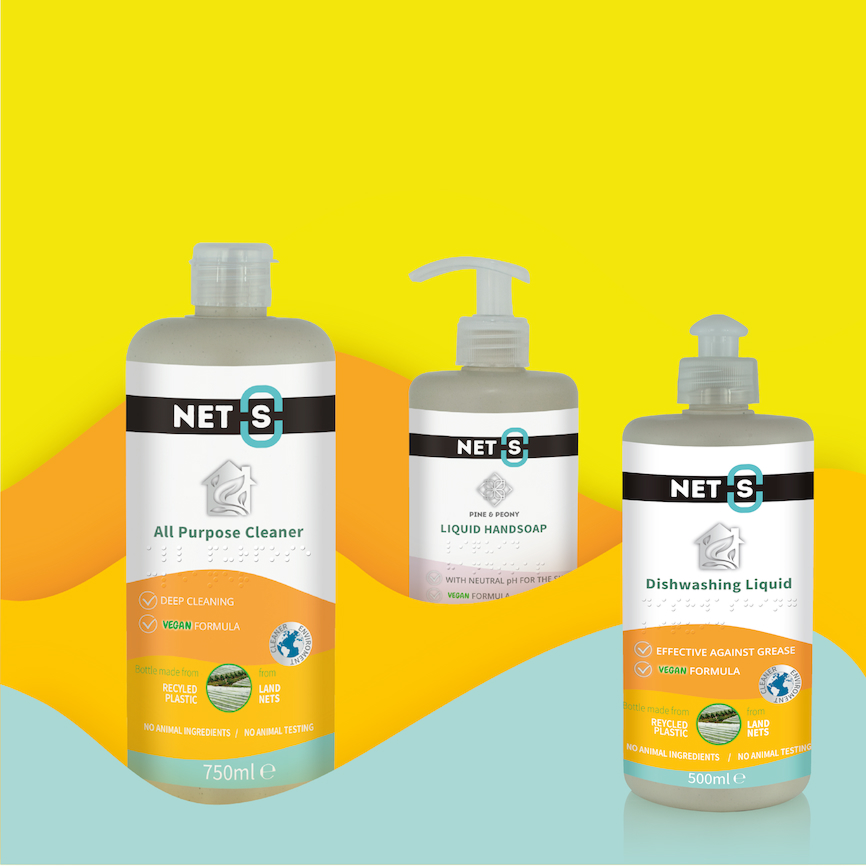
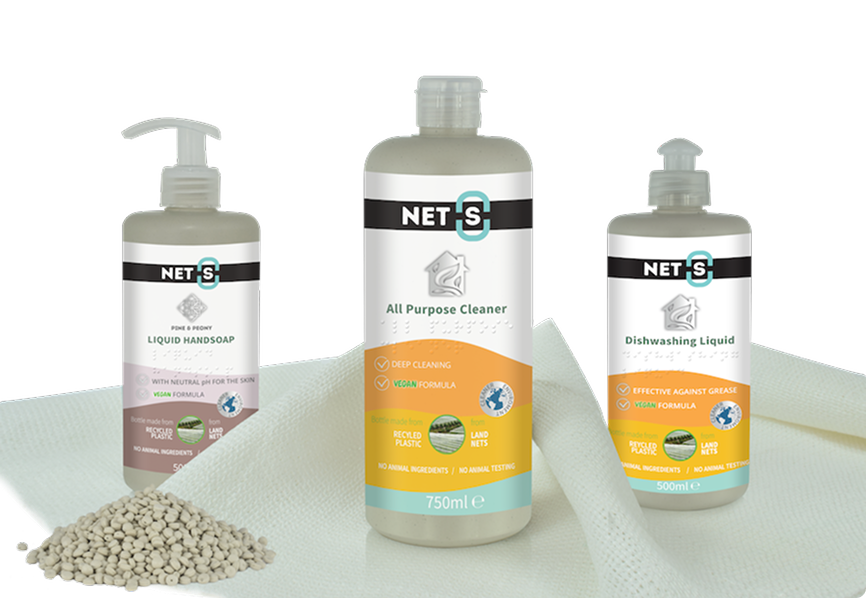
NILO’s R&D department proceeded with the development of a range of household and personal care products packaged in recycled r-HDPE plastic derived from agricultural material inputs. The new line was named NET(S), aiming to communicate the company’s vision for products and processes with Net Zero Emissions. With the goal of expanding the environmental footprint of the products, environmentally friendly formulations were introduced, meeting Vegan specifications, free from animal-derived ingredients and not tested on animals. Additionally, for the needs of the product line, transparent pumps and caps made from recycled and recyclable plastic were used to facilitate their recycling after use.
Finally, the design of the labels was also based on ecological criteria, using raw materials that comply with FSC® and PEFC™ sustainable forest management standards, ensuring they originate from well-managed certified forests and controlled wood sources.
The NET(S) product line includes the following:
Liquid Detergents:
Cosmetics:
71%
less CO2 emissions

88%
less electricity consumption
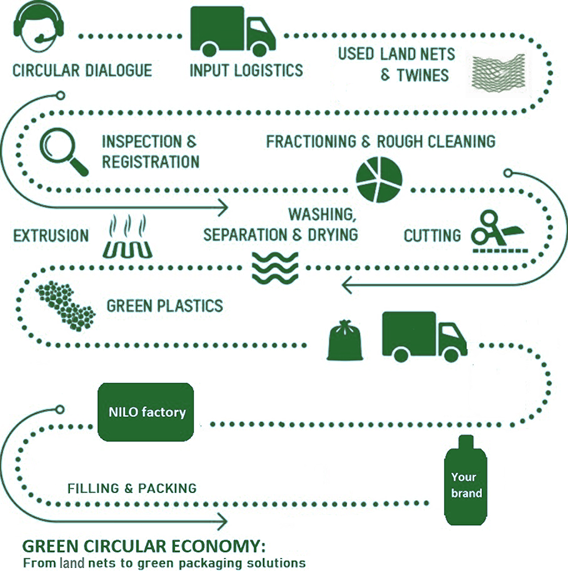
A circular process is followed for the production of Green Plastic, where used fishing nets, trawls, and ropes are collected, washed, sorted, and transformed into high-quality raw material in pellet form. Subsequently, this Green Plastic is converted into environmentally friendly product packaging.
It is worth noting that through the use of recycled HDPE plastic, CO2 emissions are reduced by 71% compared to virgin plastic (1 ton of r-HDPE saves 1.051 tons of CO2 emissions). Additionally, energy consumption is reduced by 88% (1 ton of r-HDPE saves 15,267.83 kWh of energy).
In this way, we actively contribute to the following United Nations Sustainable Development Goals (SDGs):
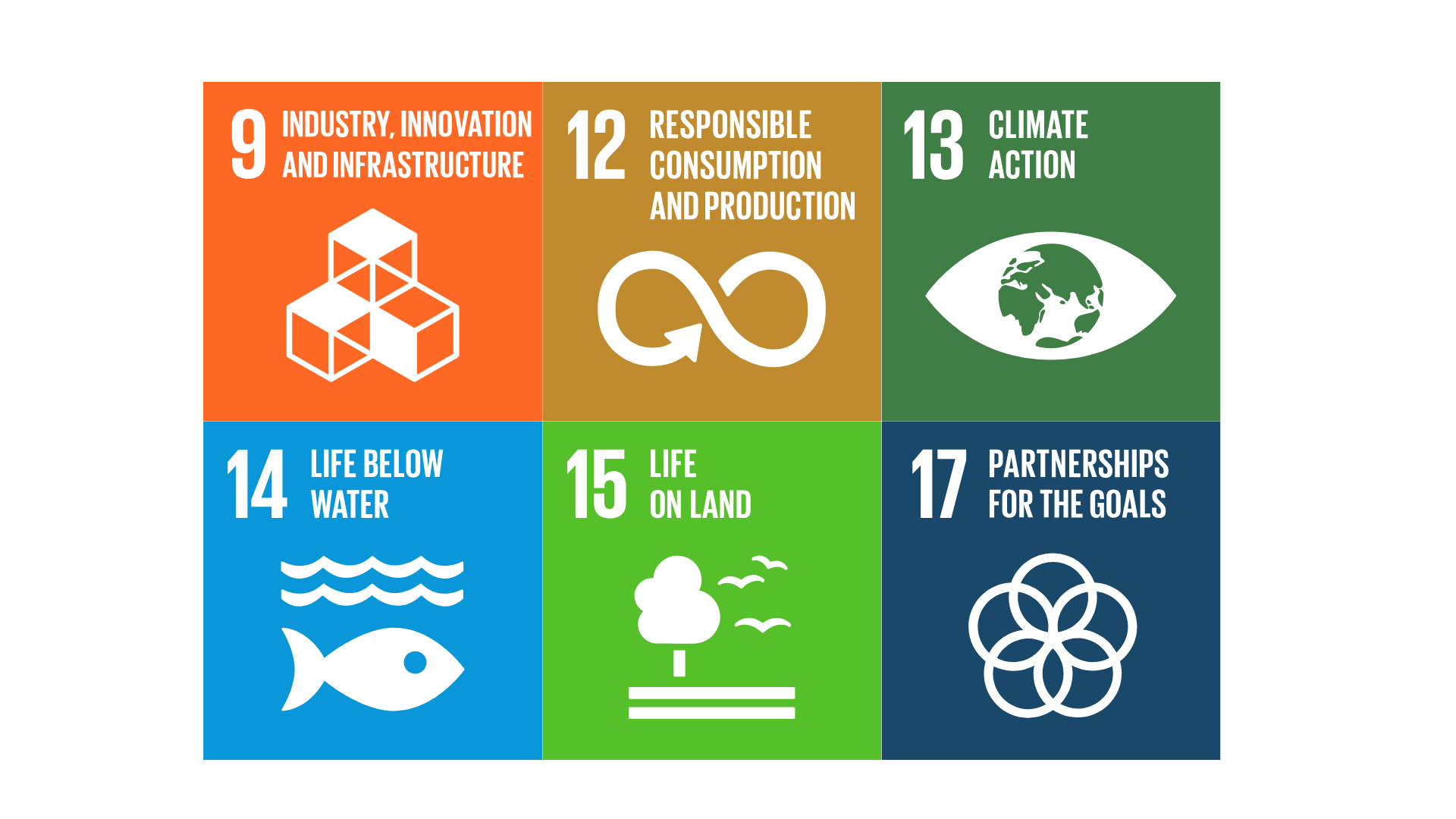
9. Industry, Innovation and Infrastructure 12. Responsible Consumption and Production 13. Climate Action 14. Life Below Water 15. Life on Land 17. Partnerships for the Goals

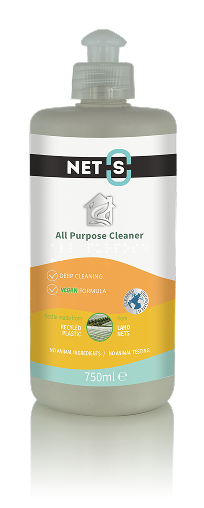
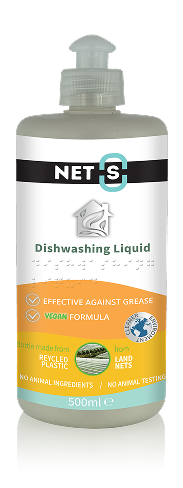
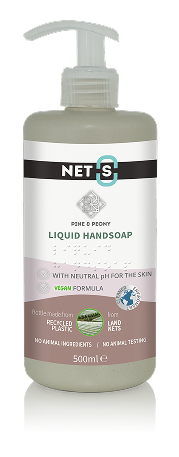
The NET(S) product line has already received significant distinctions in competitions. Particularly noteworthy was its award at the Green Awards 2022 by Boussias, as well as its recognition in the prestigious global Pentawards packaging design competition in the same year.